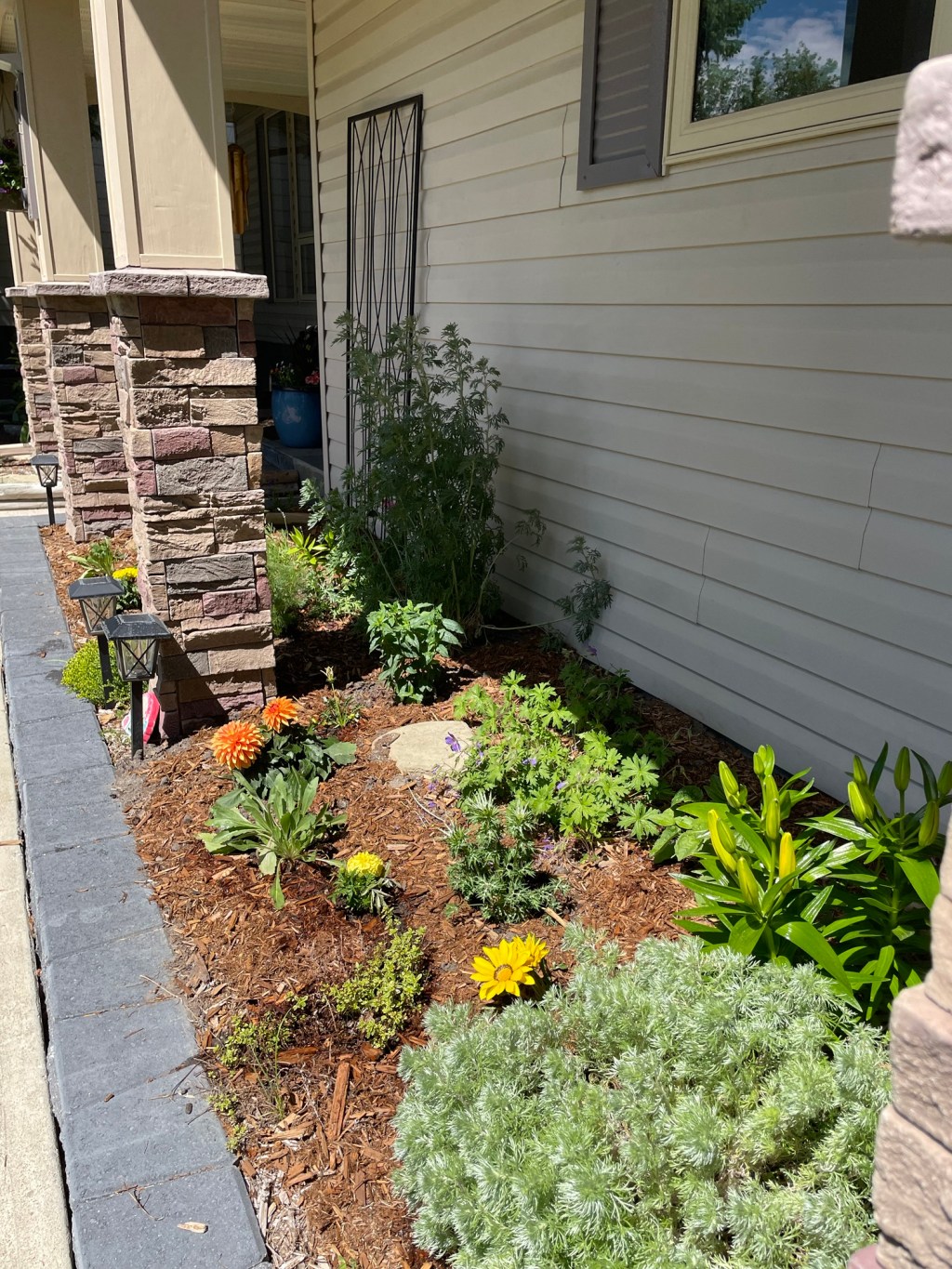
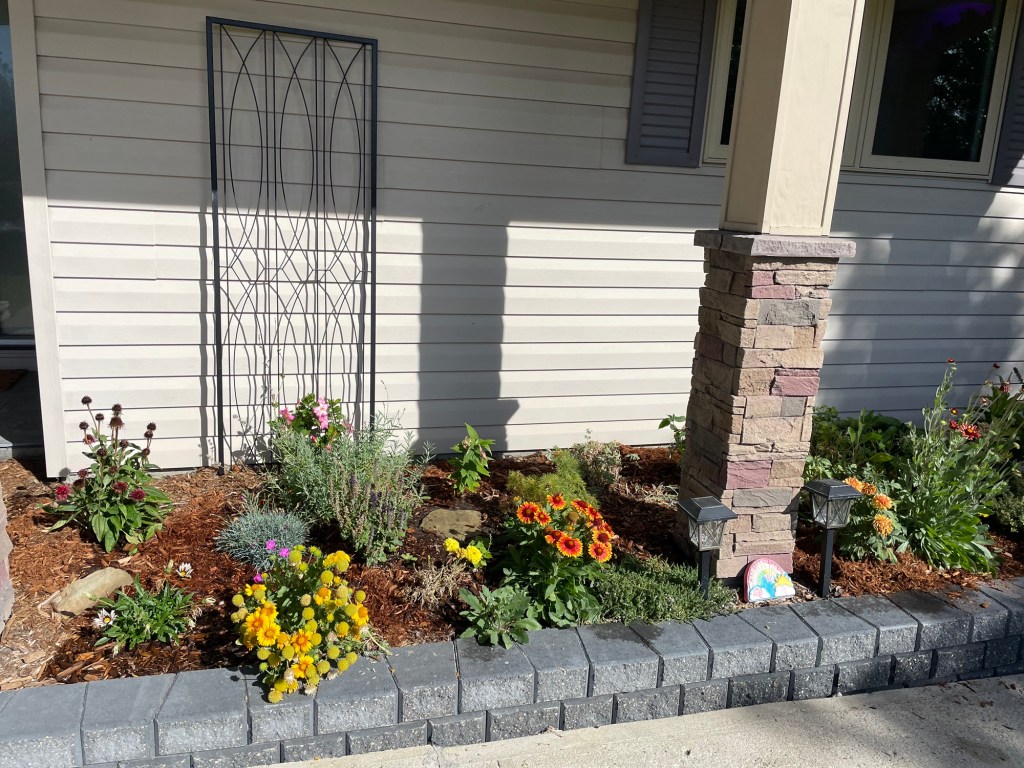
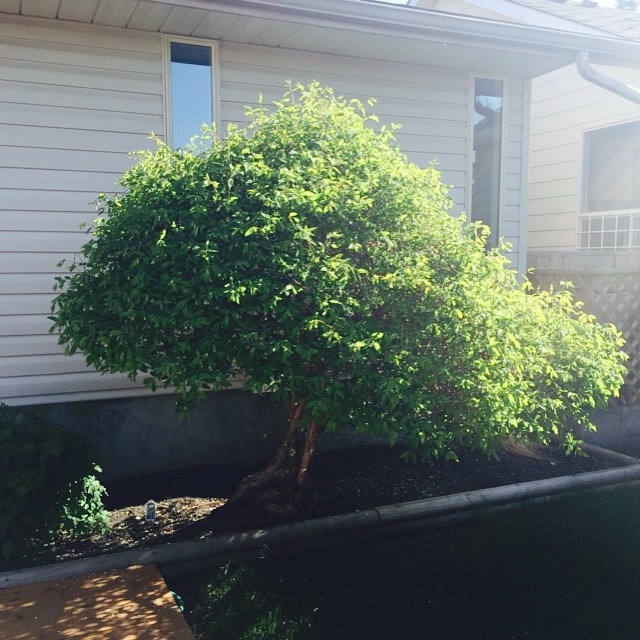
When we first moved into our house, I loved the front garden bed. It had these cute little Christmas trees in it, some purple echinacea, and some bright happy orange lilies that popped up in the spring. I didn’t really pay it much mind, put the hose to it occasionally and that was that. But over time, the ornamental cedars started to dry out, and the coneflower seemed to shrink year over year. The lilies were happy, but that was about it. So we dug out the dead cedars (man oh man I needed my husband’s sawzall to get those roots out), put in a potentilla and some barberries, replaced the echinacea, and thought, that should do it! Well, a couple more of our Chinook winters and hot summers later, and we were in the same boat AGAIN. What the heck?
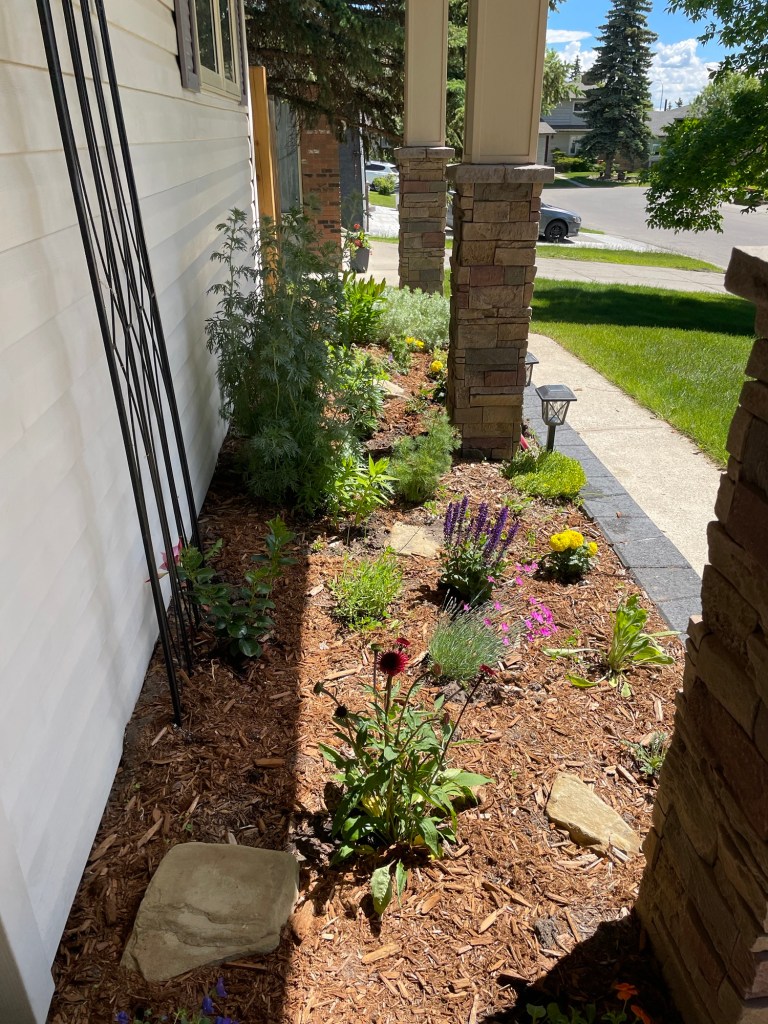
The garden bed in question is south facing, and under a large overhang. It dries out very quickly and doesn’t get any natural water from rain or snowfall because it’s sheltered by that overhang. After taking a couple garden courses (the UofS soil sciences course is tough, but it’s a gooder!), I realized it needed help. I tried to amend it. I added compost. I mulched (but not enough). I watered it weekly. Still very poor yields. In all honesty, the soil was so clay-like it would have taken years to amend it and get it healthy again. So we bit the bullet and had it dug out. Put in some quality soil, and planted some new drought-tolerant perennials. This is the second summer and most of the perennials have come back and are thriving. Yay!
And now the why:
What was missing from the original soil? Well, there were a few things. Plants need nutrients but they also need some microorganisms that live in the soil. Like worms, they help plants take up nutrients, they break down organic matter in the soil, and they do a whole bunch more things that science can tell you about if you really want to dive down that wormhole. (See what I did there?). So when my soil got super dried out in the summers and through Chinooks, that certainly did not help support the other lifeforms. (Except the ants. They LOVE a dry place to build a nest. Lots and lots of ants). If I overwatered on the other hand, I ended up drowning everything. Having a soil that is well-draining is much better than one that acts like a retention pond on the other end of the spectrum.
Plants also need aeration in the dirt. So if your soil is very dense/thick, it’s probably not helping those roots breathe (like when it’s overwatered). That’s why you see those perlite bits in potting soil for container gardening. They are there to help break up the soil, creating air pockets. In a natural environment, decomposing organic materials (bark, mulch), rocks, and even those pesky ants help provide these pockets. So how do you keep a decent level of moisture and air at the same time? Up the organic matter. Add in those things you see in a natural environment like tree bark/mulch along with some compost. As those break down they will add pockets and also make it nice and loamy. And it will encourage those organisms to move in that we want – worms to break up and down the soil into nutrients, and other little buggies and micros.
When should you do this? You can do this really anytime, but in the spring and end of season are recommended by the experts. I personally like adding compost in the spring and then the mulch in the fall as it’s easier on the budget. Leaf mulch is awesome in the fall as it acts like compost and breaks down quickly over winter.
There are of course various soil tests you can do to determine the soil texture and the Ph levels of your garden beds. The Calgary Horticultural Society has some DIY tips on their site and Lee Valley has some soil test kits. It can be a fun little science experiment if you or your kids are into that kind of thing. But unless you want to enter for garden of the year in your local community, I suggest starting with the above. I took the extreme measure by replacing the soil entirely as it was pretty hopeless. And sometimes it feels good to start fresh. The greatest thing is now I know how to maintain it properly.








 Andrea’s Path to Plants